


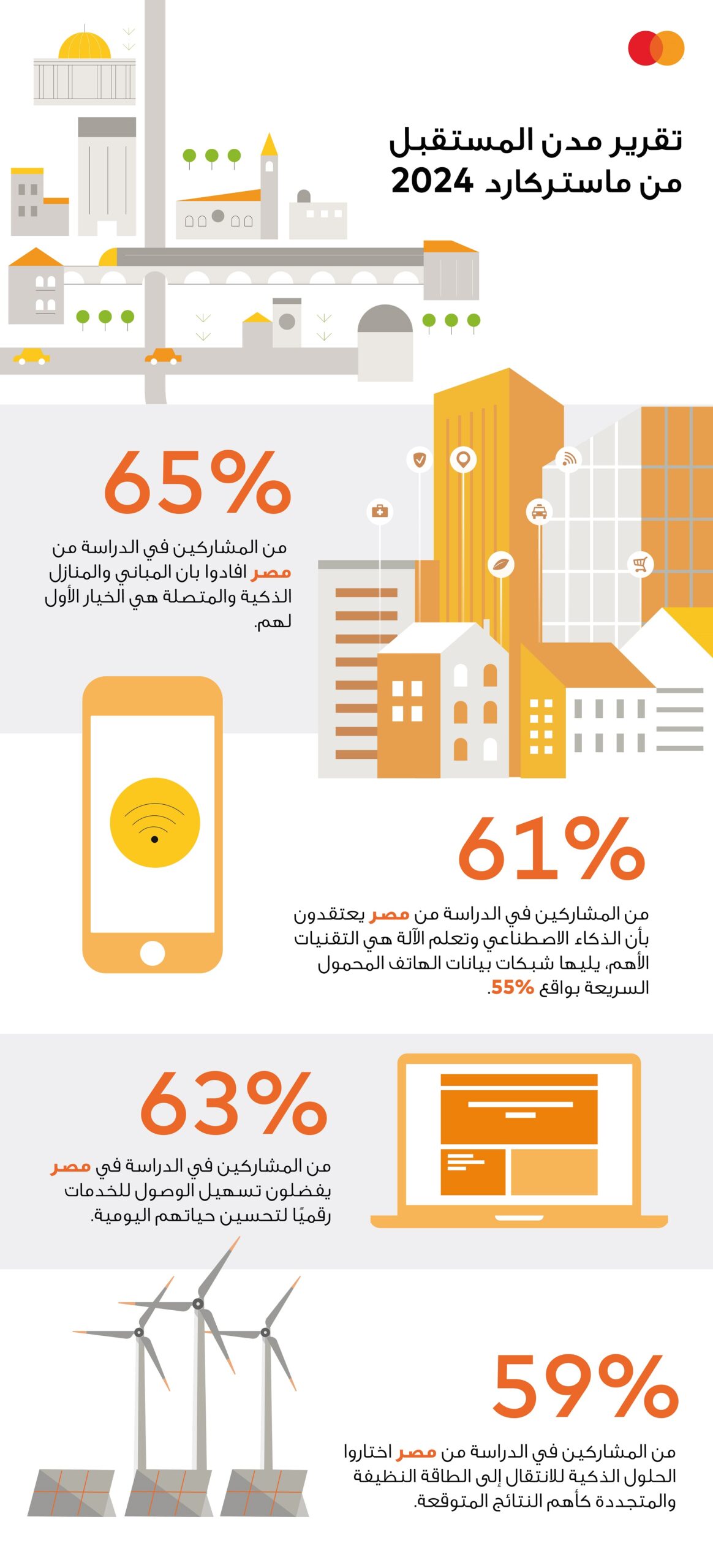
68% من الأراء في مصر يعتقدون بأن مدنهم مستعدة للمستقبل
كشف تقرير حديث صادر عن ماستركارد حول تطلعات السكان ودور التقدم التكنولوجي في بناء المدن الذكية في الشرق الأوسط أن أربعة من كل خمسة أشخاص في مصر سيكونون أكثر سعادة عند العيش في مدينة ذكية. وفي ظل التوقعات بأن يعيش ما يقرب من ثلثي سكّان العالم في المناطق الحضرية بحلول عام 2050، تبرز أهمية التركيز على الحياة الحضرية لبناء مدن أكثر أمانًا واستدامة وشمولًا في المستقبل.
وبحسب تقرير مدن المستقبل من ماستركارد، فقد أجمع المشاركون من مصر بغالبية ساحقة على أن العيش في مدينة ذكية سيجعلهم أكثر سعادة، بنسبة بلغت 82%وكانت الأعلى بين البلدان الثلاثة التي شملتها الدراسة.
قال آدم جونز، مدير عام المنطقة الوسطى للشرق الأوسط وشمال إفريقيا لدى ماستركارد: “تتمتع ماستركارد بالمقومات اللازمة للمساهمة في بناء وتطوير مدن المستقبل، بما في ذلك الخبرات والرؤية الاستباقية، والحلول التقنية الجاهزة، وإمكانية تخصيصها بما يناسب الواقع المحلي للدول التي نعمل ضمنها، فضلاً عن شبكة واسعة من العلاقات والتعاون الوثيق مع شركائنا يتم تسخيرها لتوفير مجموعة واسعة من الموارد في المجالين الرقمي والتقني. وفي مصر، تقوم ماستركارد بدعم المبادرات الملهمة التي يتم تنفيذها في مجال المدن الذكية سواء في المواقع القائمة أو المشاريع الجديدة كليًا، وذلك من خلال تعزيز الشراكات بين مختلف القطاعات وتوفير الخبرات التقنية وفق أفضل الممارسات العالمية، والاستفادة من خبراتنا الواسعة وفهمنا العميق لاحتياجات السوق المحلي.”
يرى غالبية المشاركين في الدراسة من مصر (65%) بأن المباني والمنازل الذكية والمتصلة من أهم الابتكارات التي يجب التركيز عليها، إلى جانب الخدمات وحلول التصنيع والنقل والحلول الطبية المدعومة بتقنية الذكاء الاصطناعي (65%). ومن الواضح بأن التفاؤل بالمزايا التي يوفرها التقدم التقني يطغى على بواعث القلق، وذلك على الرغم من أن المشاركين في مصر أشاروا لبعض المخاوف مثل فقدان الوظائف التقليدية، وتراجع النشاط البدني. في المقابل، يرى (61%) من المشاركين في الدراسة بأن الذكاء الاصطناعي وتعلم الآلة هما أهم التقنيات التي يمكن أن تحتويها مدن المستقبل.
أهم المزايا المتوقعة للمدن الذكية في مصر تتمحور حول مجالي المدفوعات والنقل الحضري
جاءت شبكات الدفع الآمنة والذكية (63%) وحلول المواصلات الحديثة وعالية الكفاءة (63%) في صدارة المزايا المتوقعة في مصر للمدن الذكية، ويعتقد 68% من المشاركين في الدراسة في البلاد بأن مدنهم ناضجة أو ناضجة بما فيه الكفاية لاحتواء هذا التحول.
وأبدى المشاركون في الدراسة من مصر رغبتهم بأن تسهم التقنيات الرقمية في تعزيز جودة وكفاءة أماكن عيشهم وعملهم وتجارب الدفع الخاصة بهم. وأفاد 63% من المشاركين في الدراسة بأن الوصول الرقمي إلى الخدمات، مثل المرافق والتراخيص والخدمات المصرفية والنقل، من أهم الأمور التي يمكن أن تسهم في تحسين تجربة الحياة اليومية في المدن، يليها الخصوصية التامة وحماية البيانات الشخصية (62%).
تعمل ماستركارد مع الشركاء في القطاعين العام والخاص من أجل تطوير حلول من شأنها تعزيز الاستدامة وضمان نجاح الشركات الصغيرة ودعم التحول الرقمي والتنمية السياحية والنقل في المناطق الحضري والتعليم. وقد تعاونت مع شركة العاصمة الإدارية للتنمية العمرانية لتأسيس بنية تحتية رقمية فعالة ستمكن العاصمة الإدارية الجديدة من أن تصبح أول مجتمع غير نقدي في مصر. ويسهم التعاون المستمر مع البنك المركزي المصري وشركة بنوك مصر، في تنفيذ لوائح ترميز البطاقات من خلال توفير البنية التحتية لجميع البنوك المصدرة للبطاقات في جميع أنحاء البلاد، مما يبشّر بدخول عصر جديد في مجال الدفع الرقمي ليتمكّن ملايين المصريين من إجراء معاملات بكل راحة وسهولة.
ماستركارد هي شركة عالمية متخصصة في تكنولوجيا حلول الدفع. وتتمثّل مهمتنا في ربط وتمكين اقتصاد رقمي شامل يعود بالنفع على جميع الناس في أي مكان من خلال إتاحة إجراء معاملات آمنة وبسيطة وذكية بكل سهولة. ومن خلال استخدام بيانات وشبكات آمنة وتوطيد شراكات قائمة على الشغف، تساعد ابتكاراتنا وحلولنا الأفراد والمؤسسات المالية والحكومات والشركات على تحقيق أقصى إمكاناتهم. وتستند ثقافتنا وجميع الأعمال التي نقوم بها داخل وخارج الشركة إلى حاصل اللباقة لدينا، أو (DQ). ومن خلال شبكتنا التي تمتد في أكثر من 210 بلدان ومناطق، نحن نعمل على بناء عالم مستدام يوفر إمكانات لا تقدر بثمن للجميع.
Mastercard report finds human connections and technological innovation are key for Cities of the Future
The Mastercard Cities of the Future Report taps into the aspirations of urban inhabitants in Egypt, Saudi Arabia, and the UAE
68% of respondents in Egypt believe their cities are maturing or mature enough as future-ready urban spaces
Cairo, Egypt, 28 March 2024 – Four in five people would be happier living in a smart city, according to a new report by Mastercard, which features insights related to human aspirations and technological progress for smart cities in the Middle East. By 2050, two-thirds of the world’s population will be living in urban areas, which places a renewed focus on urban living to ensure that the cities of the future are secure, sustainable and inclusive.
Mastercard Cities of the Future Report revealed that respondents in Egypt overwhelmingly agree that living in a smart city would make them happier, with 82% making it the highest percentage in the three markets surveyed.
“At Mastercard we have the expertise, real-time insights, ready technological solutions, localization options, and a vast network to help create and advance future cities. Together with our partners, we harness a variety of resources across the technology and digitalization space. In Egypt, it’s inspiring to see smart city initiatives being implemented in both legacy sites and built from scratch – developments that Mastercard continues to support by contributing cross-sector collaboration, technology expertise, global best practices and deep local insights,” said Adam Jones, Country General Manager, MENA Central, Mastercard.
Priority innovations for respondents in Egypt are connected buildings and AI-driven services
The majority (65%) of respondents in Egypt identified smart and connected buildings and homes as the highest priority innovation, along with AI-driven services, manufacturing, transport and medicine (65%) for a two-way tie.
Technological advancements widely generate more optimism than worry, though respondents in Egypt did indicate some concern for the loss of traditional jobs, along with becoming less physically active. AI and machine learning (61%) are considered the most important technologies for future cities.
Most anticipated outcomes in Egypt revolve around payments and urban mobility
At the top of the list of anticipated outcomes in Egypt, are smart and secure payment networks (63%), along with modern and efficient transportation (63%). In Egypt, 68% of respondents believe their cities are ‘maturing’ or ‘mature enough’, while in the UAE and Saudi Arabia this is higher.
Urban residents seek digital access to services and secure personal data
Egypt’s residents would like to see digitization make their living environments, workplaces, and payment experiences, more efficient. Topping the list of aspects that would enhance their daily living experience in a city, are digital access to services (63%) like utilities, licensing, banking and transportation, followed by strong privacy and secure personal data (62%).
Partnership crucial for urban innovation
Through working with public and private sector partners, Mastercard helps develop solutions to advan sustainability, small business success, digital transformation, tourism development, urban mobility, and education. Mastercard partnered with the Administrative Capital for Urban Development to build the efficient digital infrastructure that will enable the New Administrative Capital to become Egypt’s first cashless city. Ongoing collaborations with the Central Bank of Egypt (CBE) and the Egyptian Banks Company (EBC), is supporting the implementation of card tokenization regulations by providing infrastructure to all issuing banks across the country, ushering in a new era of seamless and secure digital payment transactions for millions of Egyptians.